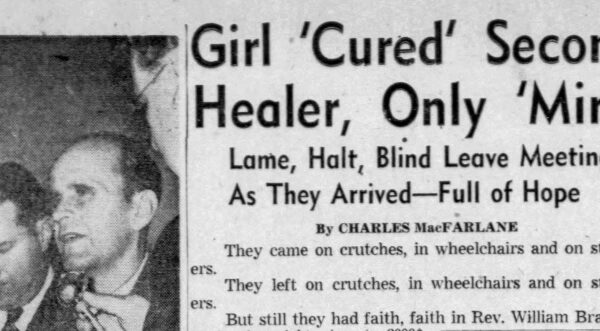
In what follows I want to trace a political theology of miracles that makes possible their circulation in U.S. revivalism. A straightforward theology—namely that God does miracles—is certainly part of the motivating belief for revivalism. But I want to trace here the political contours of revivalisms’ continuous circulation of the miraculous, well past the time that secularization theory suggested that they would give way instead to secularity, science and the enlightenment.

For the twenty-fifth anniversary of the journal Political Theology, we are diving into the journal’s archives to share highlights of what we have published. In this installment, here are some of the articles and blog posts we have published on questions of apocalypse and the apocalyptic.

At its core, Khoja-Moojli’s work explores the Pakistani culture wars and the affective attachments they elicit in the public domain as a discursive clash between the Tahrik-e-Taliban (TTP) movement and the Pakistani state.
Read the Table of Contents of Political Theology’s most recent issue!

Against that paradigm of crisis–critique–historical consciousness, in which phenomena need to be given a proper categorical frame of reference to achieve the fullness of their historical meaning, this essay turns to the theological figure of “tribulation” in order to animate another tradition of thinking the difficulty of the present.
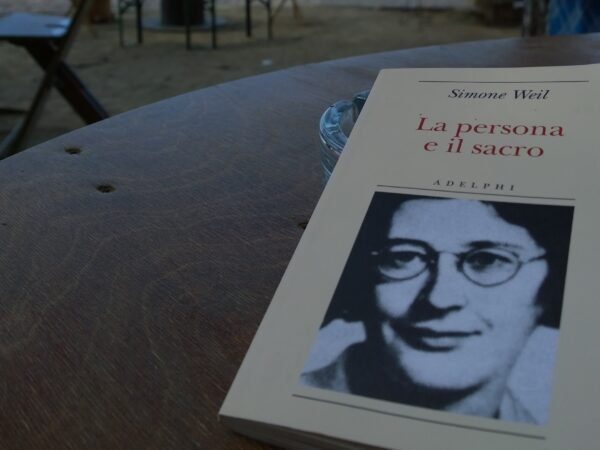
In keeping with the Center’s focus on scholarly and public engagement with issues at the intersection of politics and religion in the United States, we invite reflection on Weil that considers her thought in dialogue with religious life in the US. Please send your 500-word abstracts on Weil and political theology to Fannie Bialek and Ben Davis by November 15, 2022.
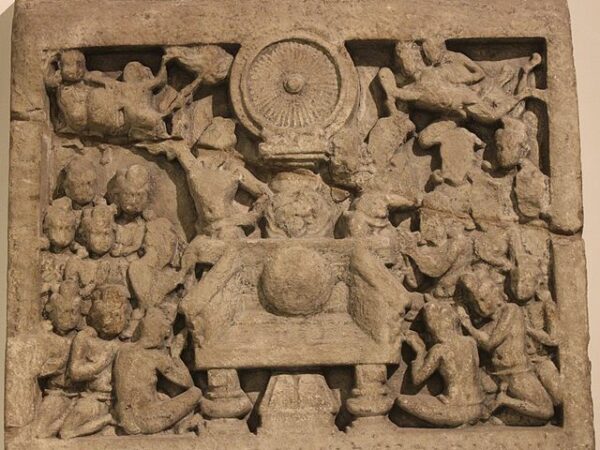
While noting earlier scholarly debates over the connection between monotheism and political theology, I pose the question of how the discourses of political theology might look different if these discourses were to become more pluralist and less focused on European and biblical traditions.

Native survivance, in [Gerald] Vizenor’s parlance, is a combination of the words “survival” and “resistance,” and it “creates a sense of presence.” According to him, “The suffix -ance designates a condition, a nature, or a quality that is more than a mere description of survival.”
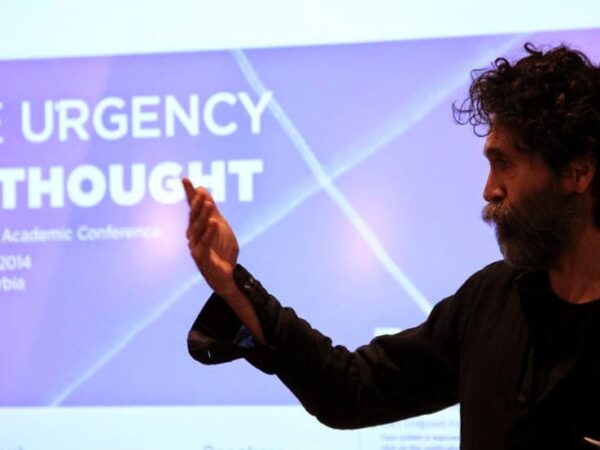
While Carl Schmitt claims that the enemy constitutes “the political,” his various writings largely ignore the historical and discursive evolution of the enemy. Anidjar’s major contribution to modern political theology lies in responding to this lacuna.

Cavarero’s feminist theory of nonviolence takes the biblical commandment of “Thou Shall Not Kill” as its starting point. This commandment is ethical (it is about one’s relationships with others) and religious (it is about one’s relationship with God), but it is also political (without it, political communities cannot exist).
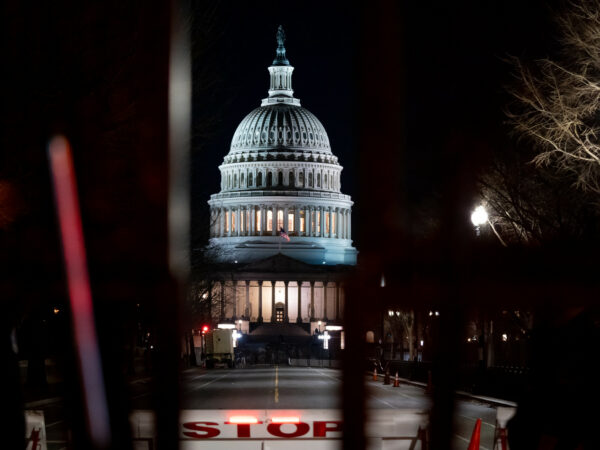
We are shocked. Morally outraged. How could a US president tout “law and order” to incite a blatant attack on “American democracy” and “the rule of law,” encouraging his supporters to storm the US capitol? Commentators decry such hypocrisy, stating the obvious contradiction between US constitutional law and violent coups. My contention in this essay is that no such contradiction exists.

Churches are locally oriented and present to the concerns of everyday life in the community. As an institution it has been an organized center of everyday life for its membership.