
By reimagining belonging as Jesus did—focusing on relationship rather than societal status—we are called to open the doors of God’s family wide, embracing the diversity of God’s creation with love, dignity, and grace.
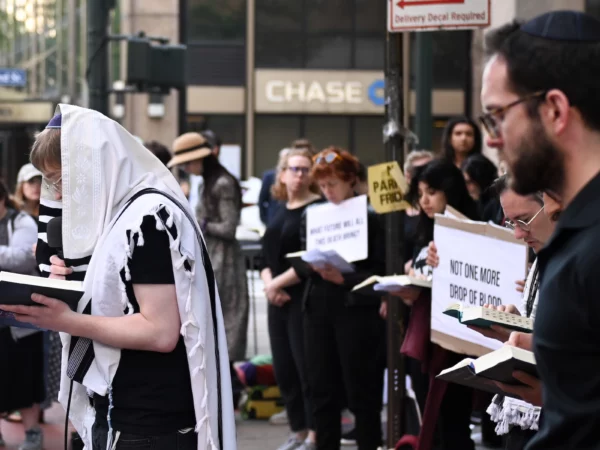
The grass seemed greener in Orthodoxy, I’ve realized, because my yearning for authenticity and escape reflected a structural lack embedded in late capitalist dystopia… Today, it seems to me more honest to learn to live with this lack, than to imagine that any faith, flag or folkway can fully fill it.

We consider our friends those who can keep a secret and help us stop feeding our inner monsters.

Is tranquility possible in an era of political emergency?

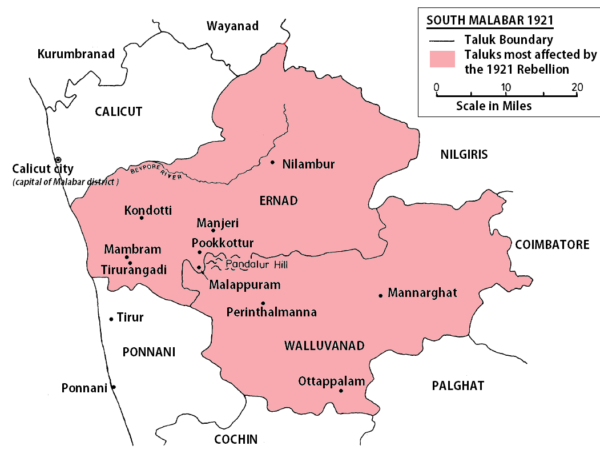
This blog post investigates and problematizes a certain narrative strategy in the historiography of Malabar rebellion, in which “war” (“yudham”) and “riot” (“lahala” or “mutiny”) were configured on the model of “politics” and “religion”. The post asks what kind of sovereign formation was imagined in such a narrative strategy and why it needs to be addressed.

Specifically, in Banerjee’s work, the sovereign is at once a figure that was used extensively for conjuring anew political and ethical communities and a bridge (or more accurately a plurality of local constructions) for forming, ironically, a non-monarchical Indian nation-state.

“We should think of queer humanitarianism as a theological project. It suffers from a messianic complex.”

From Myanmar to Mariupol, from the streets of Memphis to the waves and winds of the Mediterranean Sea: resistance to violence takes many forms. So does political protest against precarity. At which point does the unavoidable vulnerability of the living condition come to expression as political agency? Can such precarious politics constitute or configure an alternative community?

CRT is a framework or an approach to understanding the way racism is foundational to systems of judicial, political, social, cultural, religious, and theological power.
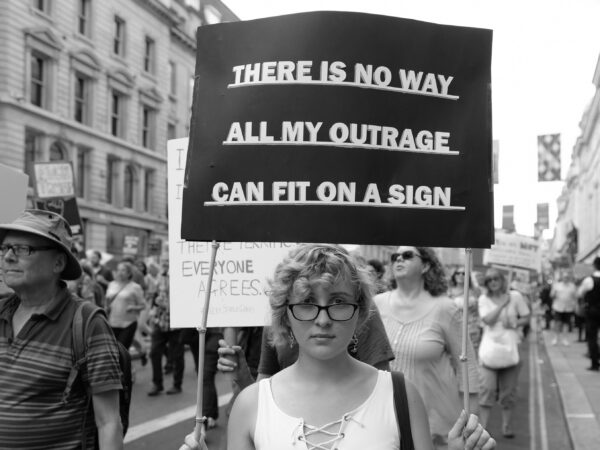
What is still nascent… is an explicit conversation between political theology and critical theories of affect, particularly in a way that might contribute to constructive projects. The sort of political theology that might emerge from such collaboration would consider how affective regimes intersect with theological constructions or religious performances.

This essay takes taboo as a critical term to trace the history of our modern present and as a conceptual companion with which to think through the complex entanglement of the ethical, the theological, and the political.