In my book, The Right of the Protestant Left (Palgrave, 2012), I tried to restore Niebuhr to his precarious place within what I called the “old ecumenical Protestant left.” The reality is, the more Niebuhr’s celebrity rose among those outside of the church, the more marginal I found that he became to the main currents of liberal American Protestantism. I’m not referring here to the pacifist circles that Niebuhr turned his prophetic pen on. Rather, his friends, colleagues, and younger brother were so frustrated by Niebuhr’s indifference toward building a inter-Protestant world community—their chief interest—that they even considered leaving him out of their project altogether. Niebuhr was eventually reconciled to the ecumenical movement by his critique of “secularism” and his analyses of national and world problems through the lens of “original sin.” Still, those closest to Niebuhr continued to deride him as the “sackcloth and ashes man,” the “sin-snooping” saint who was fundamentally out of touch with the Christian hope….
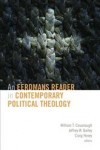
We began work on this Reader with the realization that there was no recent collection of readings in contemporary political theology. Our moment is complex and difficult to come to grips with. It is characterized by God refusing to go away, with people of numerous faiths not taking the much-touted, purely secular politics lying down. Whether one sees this as a recent development (post-9/11, say) or the way things have always been depends largely on one’s perspective. Do the most pressing questions have to do with Christian theology’s inherent and ineradicable relevance to all things political (human well-being, the nature of power, and so on)? Or do they have to do with the reverse—the fundamentally theological nature of politics, even where religious questions have been thought most successfully to have been purged from it? It will take more than a reader to answer such questions, but collecting a wide variety of voices in one place can help us understand why we are now faced with them.
I have been only sporadically involved in politics throughout my ministry, generally considering political engagement by clergy to be a decidedly mixed bag. My high calling as a preacher didn’t seem to mesh well with the grubby compromise demanded by democratic politics.Then the church sent me to be bishop in Alabama.
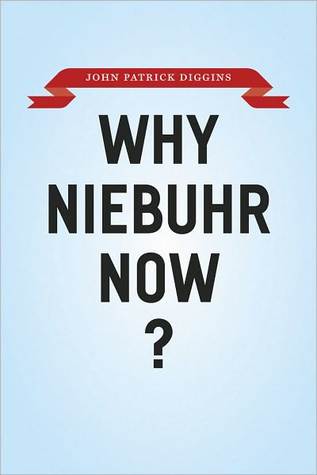
In his final book, Why Niebuhr Now?, the late John Patrick Diggins exposes what he claims are false appropriations of Niebuhr and offers in their place Niebuhr’s critique of power. It is this insight, says Diggins, that is especially needed today. This is a significant argument, one worth discussing. And so we asked two scholars, Elliot Ratzman and Ron Stone, to help us launch the conversation.

Psalm 2 presents the ways in which the powerful paint themselves as simultaneous victor and victim–and, more hopefully, it depicts a God who interrupts these fictions.
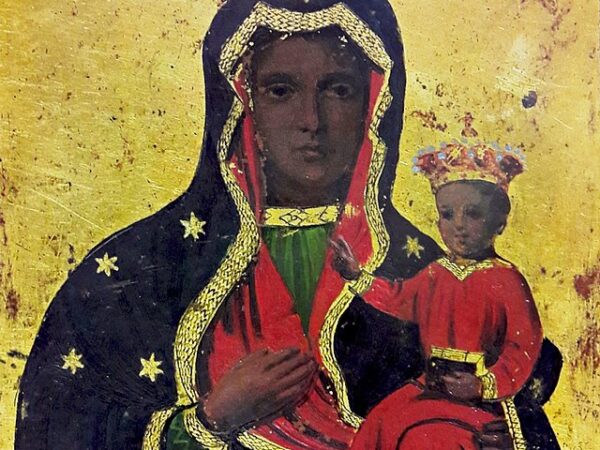
This essay is part of a book forum on Immaculate Misconceptions by Amey Victoria Adkins-Jones.

True hospitality is not simply about offering occasional charity or gestures of kindness but about dismantling the structures that prevent full participation in community life. It requires courage to challenge entrenched systems of exclusion and to imagine social bonds not as transactional exchanges but as expressions of shared humanity.
Lydia does not need a man or any other figure of authority to speak for her or to dictate her life. She is her own agent and even Luke-Acts’ Paul has to respect that. She cares for her own, commits to seeking justice, and makes her own choices.

You might be forced to accept your place in a fundamentally unfair world, but you should never take the next step to allow the values of that world to become the values that shape and give meaning and purpose to your life

Imagine a world in which we stop at every news of death. Imagine a world in which we do not trivialize or rationalize death. … Have we over-theologized life after death?