The editors of Political Theology are pleased to announce that the latest issue is now available on the web. Issue 15.3 (May 2014) features a discussion of William F. May’s Testing the National Covenant: Fears and Appetites in American Politics. Below is a full listing of the issue contents as well as a selection from Andrew Murphy’s editorial, “Complicating Covenantalism.”

In Isaiah’s prophecy a young child serves as a sign puncturing the gloom of a dark political situation. The use of infants and young children to draw attention to God’s future within the book of Isaiah has significance for our own political visions. In regarding the sign of our children we can accomplish an existential turn from a politics driven by the selfish interests of our own generation to one of responsibility and hope for the well-being of those to come.
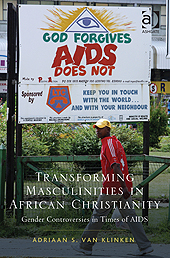
In its report Men and AIDS: A Gendered Approach (2000), the United Nations programme on HIV and AIDS, UNAIDS, has highlighted the critical role of men and prevalent concepts of masculinity in the spread of HIV and the impact of AIDS globally. Where earlier work on gender and the HIV epidemic tended to focus on women and their specific vulnerabilities vis-à-vis the HIV virus and the stigma surrounding AIDS, this UNAIDS report illustrates the shift towards men and masculinities.
According to the Pew Forum on Religion in American Life, about two-thirds of Mormons consider themselves conservative, and another eight percent upon that Republican. Unfortunately, for both the Mormons themselves and Americans in total, Mormons in America appear to fit the prevailing stereotype about religious people in politics: Today, too often, “religious” means simply a particularly virulent form of the slightly more numerous species of “intolerant social conservative” or “Republican.” This is the fault both of the political mobilization of the Moral Majority and the Christian Coalition, in which religious people eagerly tried to cram God into the cramped box of American partisan politics, and of liberals who have come to see Christianity as primarily a political opponent and thus sneeringly dismiss centuries of profound truths about human nature and society. The term has been drained of the transcendent imagination which animated the Puritans and the civil rights movement alike….
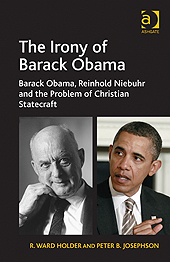
In our last post, we noted that Barack Obama was the willing victim of a particularly delicious moment of irony. The very framework that has given sophistication and moral purpose to his governing – a Niebuhrian Christian realism – could cost him the 2012 election. While Christian realism allows a statesmanlike distance between the goals that can actually be achieved and the pretensions to virtue and excellence that may be desired, very few in the American electorate wish to hear about that. In other words, to win American elections, one must be a cheerleader, or a political evangelist.
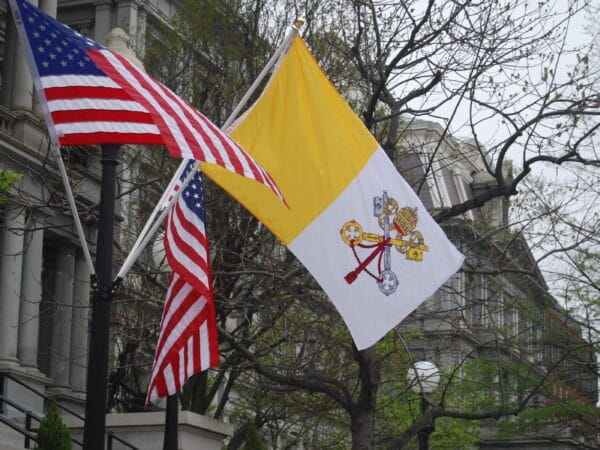
When authority is reduced to the ‘haves’ and ‘have-nots,’ we also reduce the figures within these debates to mere political caricatures of one another, trapped in a cat fight from which there is no escape.

When Republican Congresswoman Marjorie Taylor Greene compared Donald Trump to Jesus Christ, she wasn’t just being provocative. She was revealing the political logic that holds Trumpism together…and, as subsequent events would show, its limits.

Zahi Zalloua responds to Benjamin Davis’s review of his new book, To Exist as a Problem: Being Black, Being Palestinian (2026)

Benjamin Davis reviews Zahi Zalloua’s new book, To Exist as a Problem: Being Black, Being Palestinian (2026).
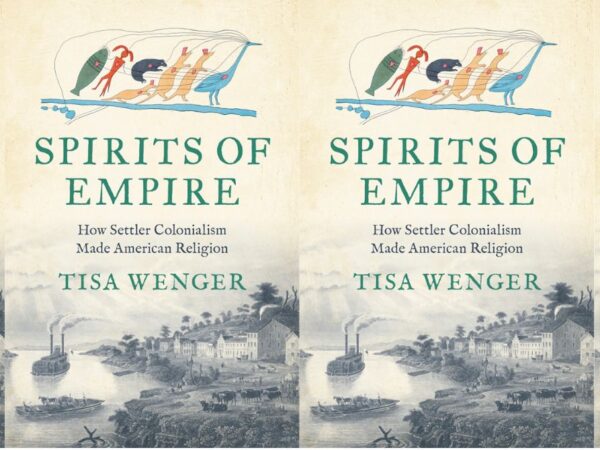
Samuel Hayim Brody interviews Tisa Wenger about her new book, Spirits of Empire

How do we then understand a biblical vision of peace relevant for our contexts today? Peace, from a decolonial theological perspective, is not a mere act of non-violence, nor is it about drawing peace plans from the perspective of the powerful global powers; rather, it is about the holistic well-being of the whole creation, coupled with justice, where life matters.