
As on so many issues that divide left-wing and right-wing Christians, the Bible seems frustratingly pliable when it comes to the issue of property rights. Conservative Christians like to assert that the Bible takes private property for granted, that the Eighth Commandment demonstrates it to be a “divine institution” or a “sacred right,” and that the many examples of wealthy patriarchs prove not only private property, but large accumulations of it, have divine sanction. Those more inclined toward some kind of Christian socialism like to point out Jesus’s very harsh strictures on the accumulation of wealth and the assertion of private property rights, and the early Jerusalem community’s practice of “having all things in common.” As so often happens, we seem to be faced with something of an Old Testament/New Testament divide, in which the Old Testament bolsters a conservative agenda, and the New Testament a liberal one. Is the Bible thus divided against itself?
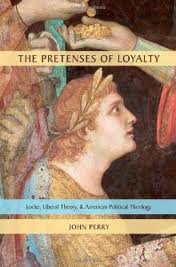
One of the most valuable contributions of Perry’s book is his attempt to illuminate the heretofore rather unexplored territory of Locke’s early work—his 1667 Essay on Toleration and especially his 1660 First Tract on Government. So obsessed are political philosophers and Locke scholars with the magna opera of 1689 that they have tended to pass over these earlier works in silence, but from the standpoint of understanding Locke’s theory of toleration, this is a great mistake, as Perry shows. Why? Well because the early Locke was an opponent of toleration, arguing forcefully against Puritans in the First Tract that the magistrate had the right to impose uniformity in religious practice, and ought to exercise this right. Why the about-face? Only if we take seriously this question, says Perry, will we be able to understand what led him to articulate his full-blown theory of toleration in 1689, and what he sought to accomplish with that theory. Moreover, in so doing, we will find that the argument for toleration is not so much of an about-face from the argument against it as we might have imagined.
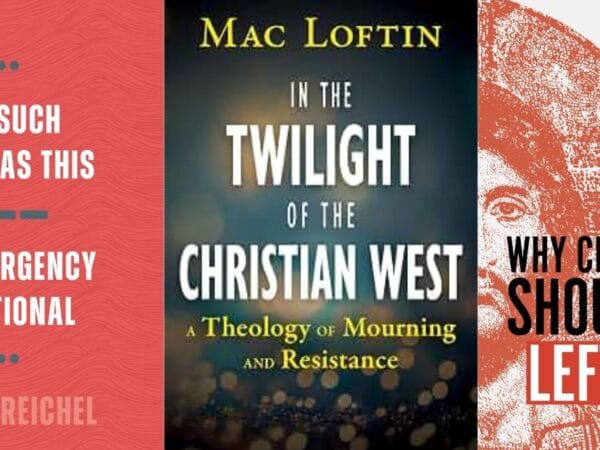
We invited Mac Loftin, Hanna Reichel, and Phil Christman, authors of recent books speaking to our present moment of crisis, to reflect on the other two books — and the state of the world.

Embodying the best of the prophetic tradition, the text encourages us to consider that religion, in fact, does have functions: liberation, feeding the hungry, inviting vulnerable strangers into our homes, and undoing injustice.

Embodying the best of the prophetic tradition, the text encourages us to consider that religion, in fact, does have functions: liberation, feeding the hungry, inviting vulnerable strangers into our homes, and undoing injustice.
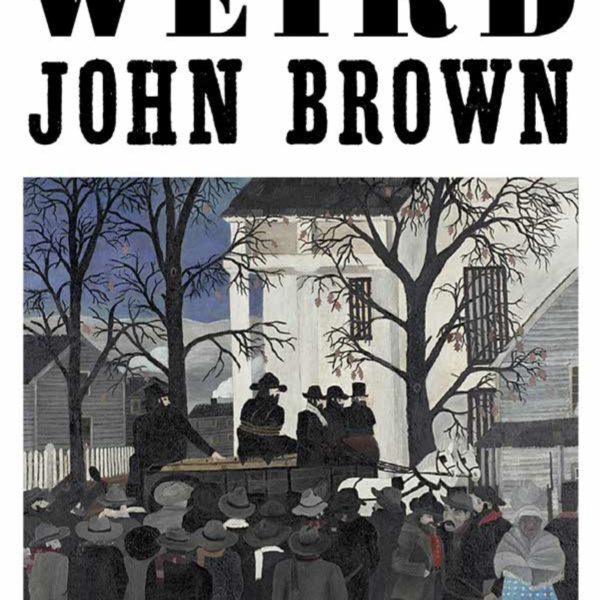
A bishop recently said that 90% of the homilies he has ever heard can be boiled down to two words: “Try harder.” Of all the things that Ted Smith’s book does well, the most compelling for me is his attempt to critique the ethical confines to which reflection on politics and violence — along with so much else — is often limited.
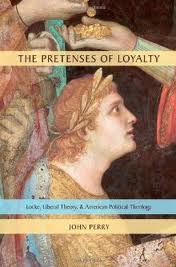
John Perry’s recent book “The Pretenses of Loyalty” offers a clear, penetrating, and persuasive diagnosis of the predicament of contemporary liberal political theory through consideration not only of its present tensions, but more importantly, of its amnesia regarding its historical foundations. I say clear because Perry’s exposition is tightly focused, lucidly written, and structured so as to ensure ease of understanding. By missing no opportunity to repeat his main thesis and the key issues at stake, he walks a fine line, to be sure, between assisting and insulting his readers, but ultimately avoids the latter in my judgment. The diagnosis is penetrating because it does not rest content with surveying the ongoing contemporary conflicts between politics and religion and the critiques marshaled by communitarian theorists such as Michael Sandel and Stanley Fish—though he does this admirably in the first two chapters—but digs right down to the historical roots of liberal theory, the amnesia of which, he argues, is largely responsible for its present predicament….