

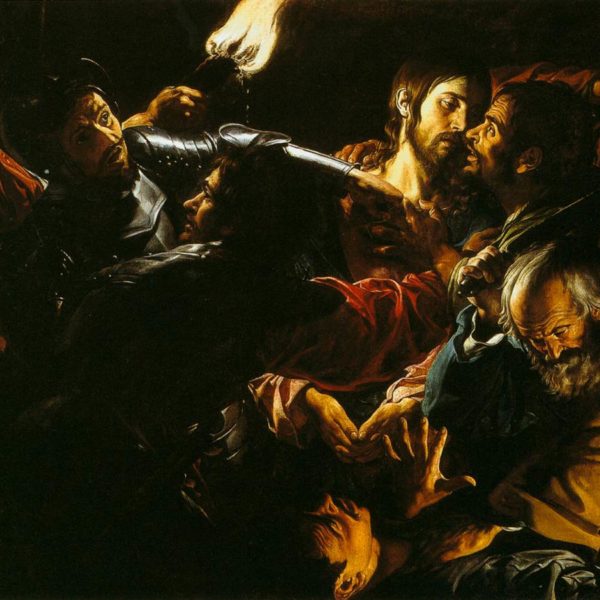
Jesus, against our expectations, comes to bring division in places where unity formerly existed. He calls us to be attentive to the way the winds of our age are blowing.



[The the first of three posts this week on Michael Walzer’s “In God’s Shadow: Politics in the Hebrew Bible.”] Michael Walzer occupies a distinctive place in political interpretation. He is a distinguished political scientist who continues to have a significant investment in the Hebrew Bible. His writing thus permits a convergence of the agility of his Jewish perspective on the Bible and his engagement with contemporary questions of power. He has authored an important book on the Exodus narrative and the continuing influence of that narrative upon revolutionary thought and action. His paper, “The Prophets as Social Critics,” moreover, recognized the prophets of ancient Israel as serious social critics and analysts who exposited Israel’s “core values” of justice and righteousness and who were alert to oppressions that impeded social solidarity…
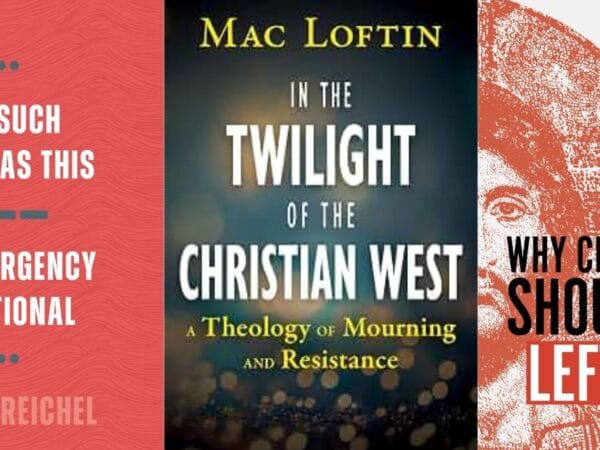
We invited Mac Loftin, Hanna Reichel, and Phil Christman, authors of recent books speaking to our present moment of crisis, to reflect on the other two books — and the state of the world.

While even his closest associates would lean towards dismissing the people to fend for themselves, [Jesus] invites the community of the wilderness into a divine economy of care. Sharing, as a physical manifestation of that care, requires a suspension of the belief that scarcity is the only reality available in the moment of want.

Kingship is an irredeemably hierarchical, patriarchal form of rule, right? Maybe not, says Psalm 146—if the king is God.

Heavenly citizenship for Paul is certainly not about escaping social responsibility within this life. The path that follows Christ is a path that moves one’s focus from earthly things to heavenly.

Listening and responding is a blueprint for us all: it’s amazing and wise to discern God’s leading in the context of community.