As the Iowa Caucus approaches, increased attention is being paid to the religious affiliations of the candidates for the Republican presidential nomination. Much of this discussion has centered upon Mitt Romney’s Mormonism, but the media has also paid a significant amount of attention to Newt Gingrich’s Catholicism. The latest round of controversy in the mainstream media began with Laurie Goodstein’s New York Times piece, in which she speculated about whether Gingrich’s 2009 conversion to Catholicism fits into a broader shift towards the right for Catholic participation in American politics in the post-Kennedy era. Likewise, Barbara Bradley Hagerty’s NPR piece narrated the details of his conversion process, highlighting the pivotal role of his current wife, Callista, as well as his attraction to the intellectual tradition of the Church.
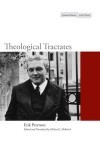
“Political theology” as discourse came back into circulation almost a hundred years ago thanks to the efforts of Carl Schmitt. In Germany, at least, its feasibility as a theological category was promptly booted out of play by his close friend Erik Peterson (d. 1960) in an oft-cited – but less often read – monograph on “Monotheism as a Political Problem” (1935). That and other writings of Peterson’s are now available in English translation, most of them for the first time, in my edition of Theological Tractates (Stanford University Press, 2011). Peterson reveals himself to have been an “anti-political” theologian who yet possessed an acute sense of the political dimension of subjects as diverse as liturgy, mysticism, ecclesiology, and martyrdom.
First, I want to take social practices and norms as foundational. They do not come from anywhere else, not from people or institutions or God. It is practices and norms all the way down, as it were. Second, I want to present practices and norms as always in conflict. Norms are derived from practices, but they always misrepresent practices; practices are pulled towards norms.
The Libyan situation poses very different questions as whatever regime Gaddafi was leading has clearly been removed by the revolutionaries, and hence the question of what will replace it is currently vexing minds in Libya and beyond.

Islam in China is going through a period of architectural amputation called Sinicization. The result is a haunting landscape where dome-less and minaret-less mosques visualize deficiency as a definition of what it means to be Muslim in China today.
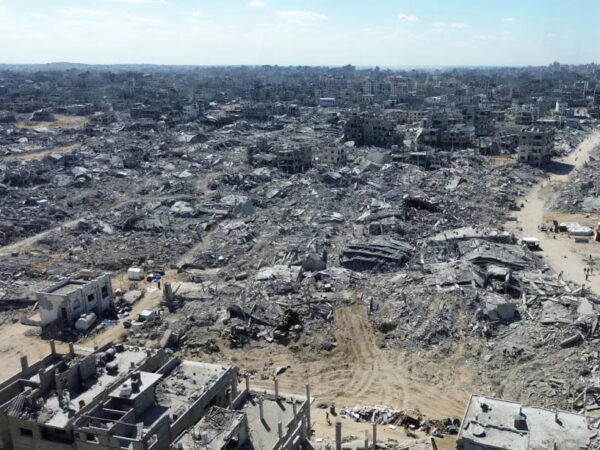
For those witnessing today’s televised violence and mass destruction, the collapse of meaning renders nihilism seductive. Can the collapse of meaning be resisted?
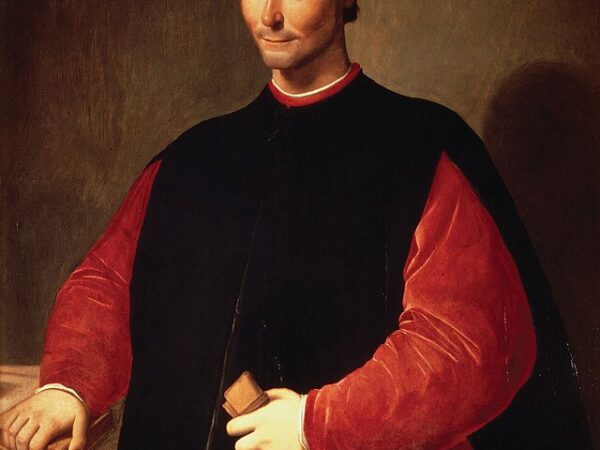
Machiavelli’s Discourses on Livy reveals how religion became not a check on power—but its strategic lifeblood.
Why did Dwight Hopkins, a leading Black liberation theologian and a longtime University of Chicago professor, move toward MAGA?

Luke Roberts introduces the essays in the symposium on Religion and Public Life.
We need to critique the fact that political theology has turned into ideology in Africa.