We began work on this Reader with the realization that there was no recent collection of readings in contemporary political theology. Our moment is complex and difficult to come to grips with. It is characterized by God refusing to go away, with people of numerous faiths not taking the much-touted, purely secular politics lying down. Whether one sees this as a recent development (post-9/11, say) or the way things have always been depends largely on one’s perspective. Do the most pressing questions have to do with Christian theology’s inherent and ineradicable relevance to all things political (human well-being, the nature of power, and so on)? Or do they have to do with the reverse—the fundamentally theological nature of politics, even where religious questions have been thought most successfully to have been purged from it? It will take more than a reader to answer such questions, but collecting a wide variety of voices in one place can help us understand why we are now faced with them.
I have been only sporadically involved in politics throughout my ministry, generally considering political engagement by clergy to be a decidedly mixed bag. My high calling as a preacher didn’t seem to mesh well with the grubby compromise demanded by democratic politics.Then the church sent me to be bishop in Alabama.
In his final book, Why Niebuhr Now?, the late John Patrick Diggins exposes what he claims are false appropriations of Niebuhr and offers in their place Niebuhr’s critique of power. It is this insight, says Diggins, that is especially needed today. This is a significant argument, one worth discussing. And so we asked two scholars, Elliot Ratzman and Ron Stone, to help us launch the conversation.

Trump’s charisma and meteoric rise in politics is merely the culmination of White evangelicals’ search for a hero that would kick the asses of liberals and the nation’s external enemies.
As is the case with religion, progressive intellectuals tend to look on charisma with suspicion, relegating it to the realm of authoritarian and manipulative politics.
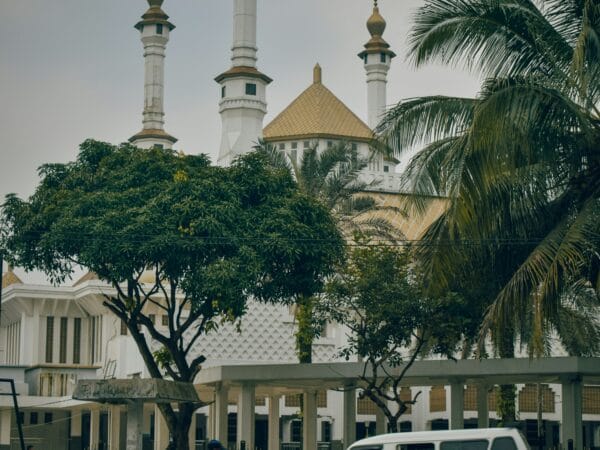
An interview with Saskia Schäfer by Muhammad Afdillah.

This essay is part of a book series on Neena Mahadev’s Karma and Grace.


The lived practices of Afro-Bolivian farmers invite not only a philosophical reinterpretation of vulnerability but also a rethinking of Catholic social thought. Their adaptive and relational forms of life disclose a theological reconfiguration of Catholic political theology.

The society of commodity producers that Marx described continues to expand its mystifying in a world that commodifies all things, including the eucharist, the activism of indigenous communities, and the future.

I am interested in this sense of the ordinary, ongoing strike. This humble strike—not necessarily modest but rather close to the ground—could involve a politics of refusal and boycott, where those terms could be understood not only as negatives, but also as holding space for a new international community, and thus connecting explicitly something already connected or entangled in practice.

What might it mean to learn from the past now that time has moved on and “the past” now refers to a bygone era of liberal hegemony?