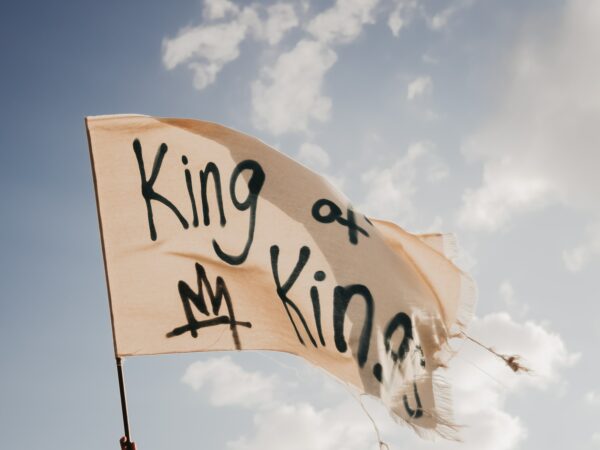
Kingship is an irredeemably hierarchical, patriarchal form of rule, right? Maybe not, says Psalm 146—if the king is God.
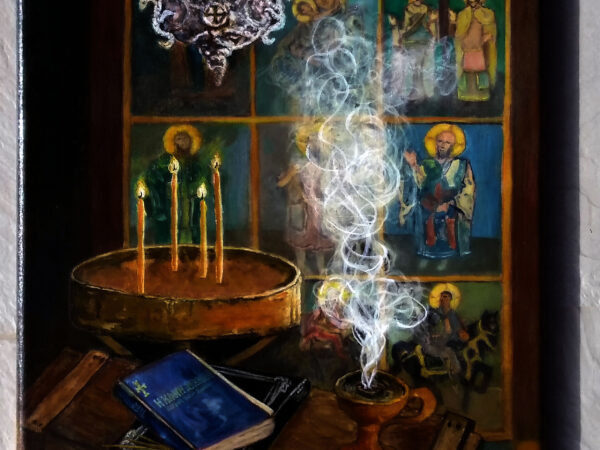
The primacy of the inner type of freedom can produce a withdrawal from the world or an attitude of passivity towards its frustrating circumstances, particularly when the believer searches for real freedom exclusively inside the self irrespective of the conditions that exist in the broader socio-political environment.

Our problem is neither that we have power nor that we lack power. Many factors outside our control determine how much power we actually have. Our problem is that we fail to recognize the power we do have so that we can steward it well.
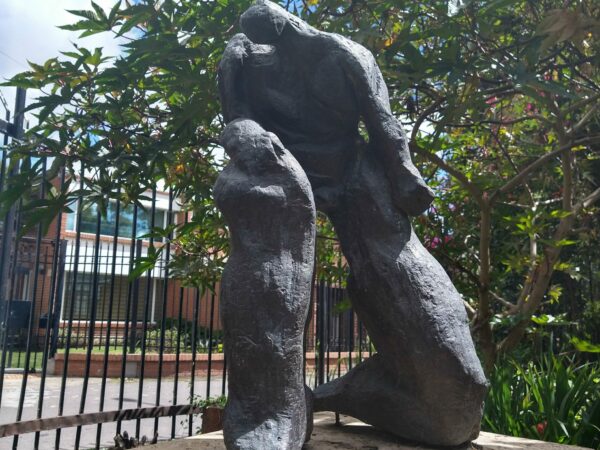
This essay is a backward journey to beginnings, belongings and theological political anxieties.
[Marion’s] central concepts and phenomenological method offer an ambiguous resource for political theology: on the one hand, he articulates a rigorous method of doing phenomenology which is trained to remain open to phenomena historically ignored and marginalized, and on the other hand, his own conclusions can veer towards a Christian triumphalism which is in danger of betraying the primary aim of his philosophical project.

Lyotard’s thought as it appears in Le Différend describes a linguistic state that evades speech, and the ways in which justice could be done to it, or not. Bearing witness to unpronounceable utterances brings about the idea of faith.
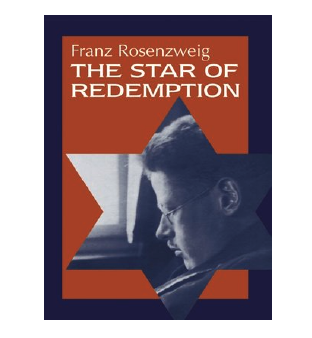
Please join the Political Theology Network for a special roundtable on Rosenzweig’s The Star of Redemption on June 1st at 4-5:30 PM EST

Pentecost does not present us with the ideal of the uniform, homogeneous community, but with a divine power that traverses all of our differences. God’s will is to unite us in our diversity, not to extinguish it.

As Puar illustrates, debility ensures future sources of profitable capacitation in the name of liberal democracy and liberal rights bearing subjects. I am interested in what can be gained by attending to religion in this constellation, with the goal of further elaborating the dialectic of material and belief that engenders debility.

What if we saw in Psalm 98 a longing for an abolitionist vision of justice? How might entering into the psalmist’s vision of a joyful, praising creation animate and free our collective vision of how we might live together?

“[For] quantum gnostics, there has never been a creation of the world or in the world—it is the world that is ‘wicked’ or ‘evil’, and consequently also the God who claimed to have created it and yet hesitates to assume it.”

Jesus pronounced judgment on the entire system and dismantled it with a whip – modeling for us how to treat egregious distortions of Christian worship that distract from God’s redemptive work. This is not politics “out there,” in the public square, but in house.