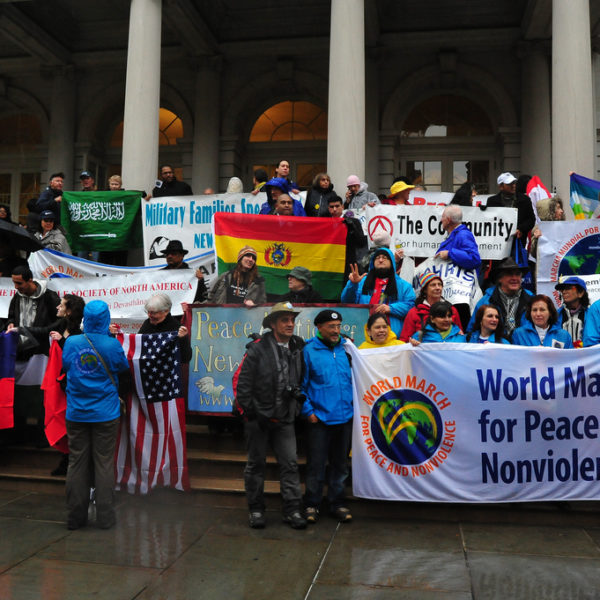
Pope Francis proclaims: “There was a time, even in our churches, when people spoke of a holy war or a just war. Today we cannot speak in this manner.” Yet, we can and have been invited by Francis and others to speak in the manner of centering nonviolence.
Currently, for most Brazilians, Christian commensality is an almost impractical challenge: there is no bread or wine, no communion. As Christians, we have a responsibility to ask ourselves what it means to share Christ’s table in this context, even though we still have a long way to go.

The authors of this symposium nvite the reader to consider the liberation of those at the table, those on the table, those servicing and serving the tables, those raising, tending and harvesting for tables, and those without access to any table at all.
Pope Francis suggests that trans people are destroying the world. Perhaps he might learn something if we did.
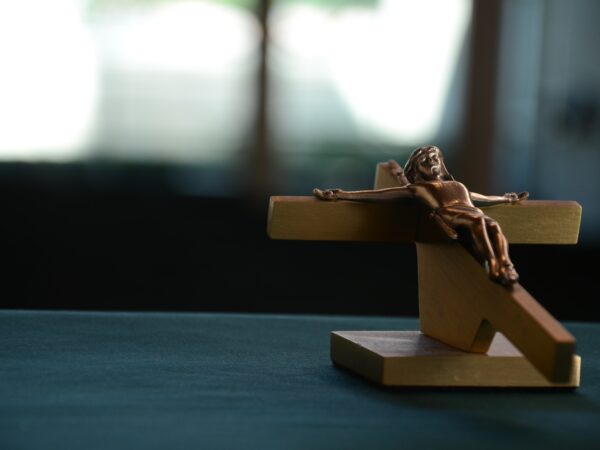
In this hymnic account of Jesus’ person and mission, his preference for and service to others becomes a paradigm for faithful human existence. God’s solidarity with the human race discloses the truth of both power and freedom.
My concluding question is whether the idea of religion itself both in its oppressive and liberatory manifestations becomes, in combination with the state, a recipe for spiraling trauma and terror.
God’s recurring appearance in Susan Taubes’s novel Divorcing confirms the work’s alarming in-sight about the seductions of patriarchal authority while also dramatizing fiction’s imaginative power.
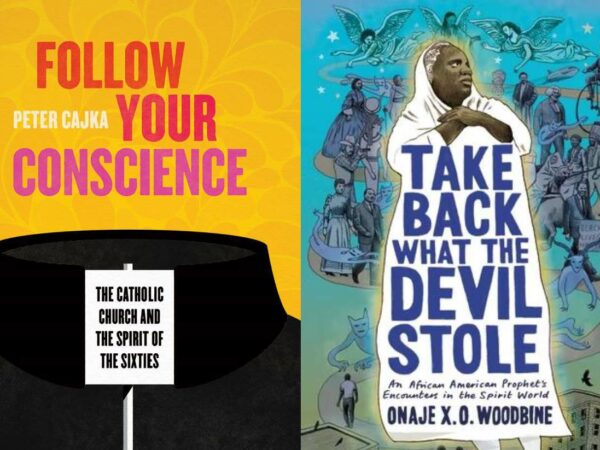
Woodbine’s beautiful narrative is extraordinarily self-aware, and deeply humane. Haskins’ own voice is strong, active, present throughout. I had not planned to read it in one sitting but I literally could not put it down. Only a couple miles northwest of Haskins’ Roxbury, in the mostly Irish Catholic neighborhood of Chestnut Hill near Boston College, there is a totally other religious and cultural world. This is the place of white priests, educated Catholics, lecture halls, and the circuits of urban Catholic power. Particularly in the 1960s and 70s, it might as well have been another planet from Afro-Caribbean Roxbury.
Registration is now open for the upcoming Political Theology Conference in Philadelphia, PA, September 7-10.
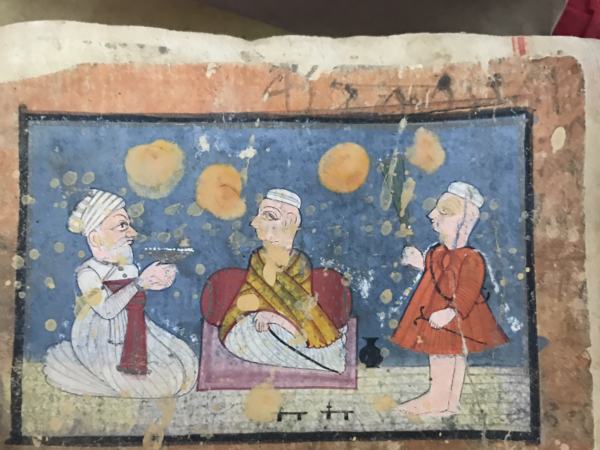
The following includes an introduction and an excerpt from an interview by Prashant Keshavmurthy (Associate professor of Persian-Iranian Studies at McGill University) with Dalpat Singh Rajpurohit (Assistant professor of South Asian Studies at the University of Texas at Austin). The discussion features Rajpurohit’s new book, Sundar ke svapn: ārambhik ādhuniktā, Dādūpanth aur Sundardās kī kavitā (2022).

“Jesus’ “I am the way” is an opportunity for Christians to demonstrate the path of love to people…it doesn’t warrant any exclusion or hatred towards the other…”

As Catholic Re-Visions welcomes two new members to its leadership team, the three co-conveners sit down for a conversation about their backgrounds and the blog’s direction.