
For the sixth year in a row, we are hosting a party in conjunction with the American Academy of Religion meeting.
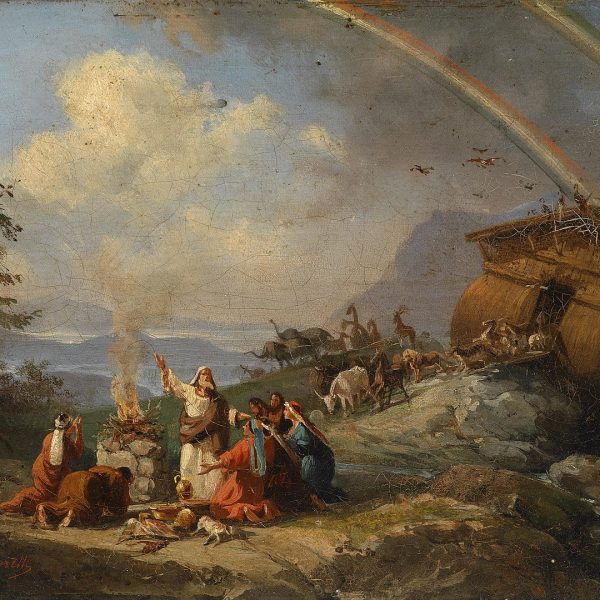
At stake is the very possibility of democratic politics. Without minimizing or devaluing the experience of oppressed and marginalized communities, the way forward—as Luke Bretherton has convincingly argued—necessarily entails nurturing some form of cohesive social vision.

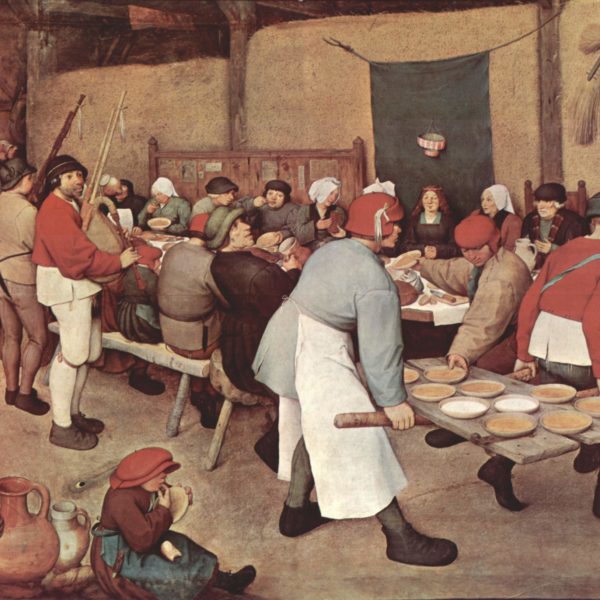
The meal table is a political site, where new manners, communities, and values are cultivated. In his radical teaching concerning proper conduct at feasts, Jesus unsettles prevailing social politics and calls us to transform our behavior to correspond to the inbreaking order of his kingdom.
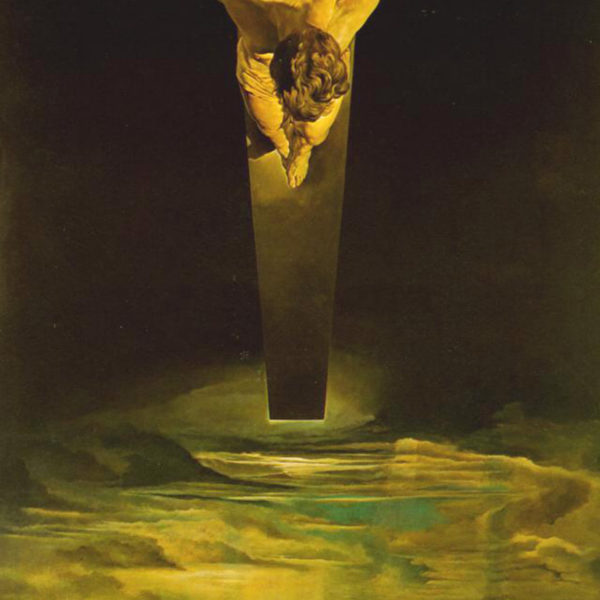
Psalm 85 speaks of the meeting of justice and peace in a kiss in God’s new order. While we often futilely pursue such a goal through our politics, in Scripture we see its fulfilment through the cross.
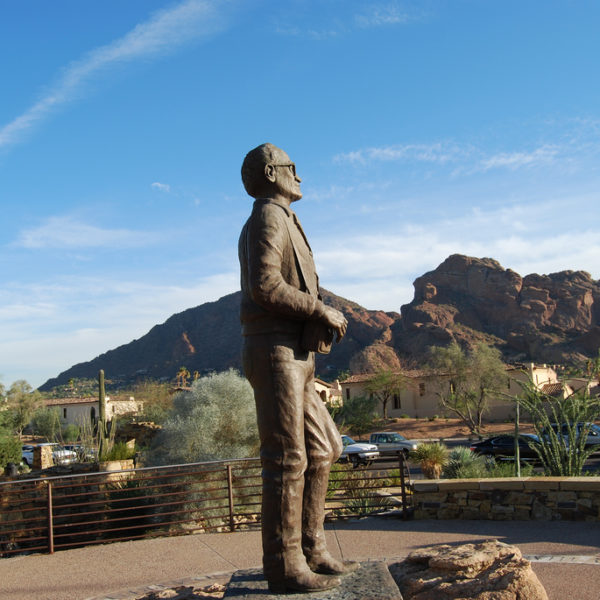
To swipe Oscar Hammerstein’s famous lyric, histories of twentieth-century American religious history – whether academically or popularly-oriented – can’t figure out how to solve a problem like Rousas John Rushdoony, the progenitor and elder statesmen of Christian Reconstructionism.
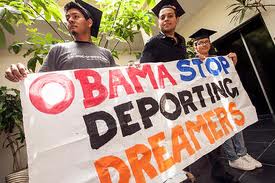
My post, “Two American Dreams and One Economic Reality,” looked at the debate about American values initiated by President Obama’s now famous quote: “You didn’t build that.” I argued that the radical individualism embodied by the Republican outrage against this phrase is consistent with neither Christian faith nor economic reality. I am proud of that essay. I think it provided a clear sense of why my Christian faith leads me to support the Democratic Party. But, some of my friends and colleagues pushed back against it pretty hard. They were concerned that my rhetoric of grace and gratitude, my vision of God’s economy, did not quite fit their experience of President Obama or the Democratic Party over the past four years. The disillusionment of these faithful Christians and good Americans is understandable, but my fear is that the fact that Barack Obama is not the Messiah may threaten his very limited but very real accomplishments in both international and domestic affairs….

This week’s lectionary reminds us that power comes and goes. Today the church is tempted to resent its lack of influence, but Mark’s story of Jesus and the words of Paul remind us that even spiritual power has its limits….
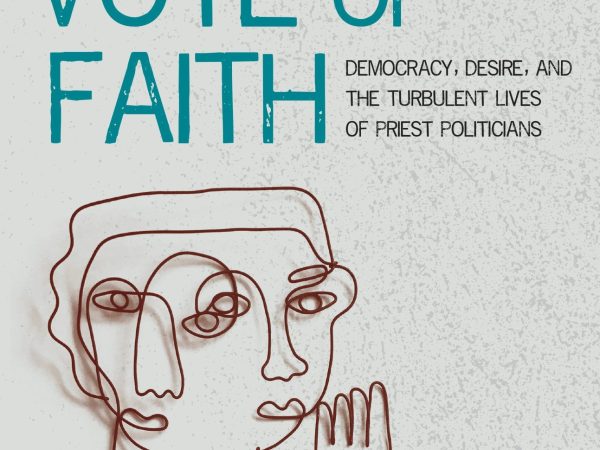
Priests, in order to become mayors, had to be viewed as lovers. So, the mayor-priest is a ‘lover’ in multiple senses. He has to embody God’s love. He has to perform paternal love. He has to signal to society that he is also, very likely – albeit in secret – to be a good sexual lover as well.

Jean-Luc Marion waded into political discourse with his 2017 book Brève apologie pour un moment catholique (Brief Apology for a Catholic Moment) which uses aspects of his phenomenological and theological project to argue for a model of non-political politics: one based exclusively on the perfect will of the Triune God.

The following is a small portion of a longer interview with China Miéville in the journal Political Theology.

Seva lends itself to easy appropriation across political and religious contexts, while also furnishing mutually intelligible tropes of service, welfare, and social betterment.