
The following is the first of a short series on partition and/as political theology, which will be published in the journal Political Theology in 2024.

Judith Butler’s work in queer theory inspires Catholics to consider the material relations of the body and contributes to a mystical-political, eschatological hope.
 [1]">
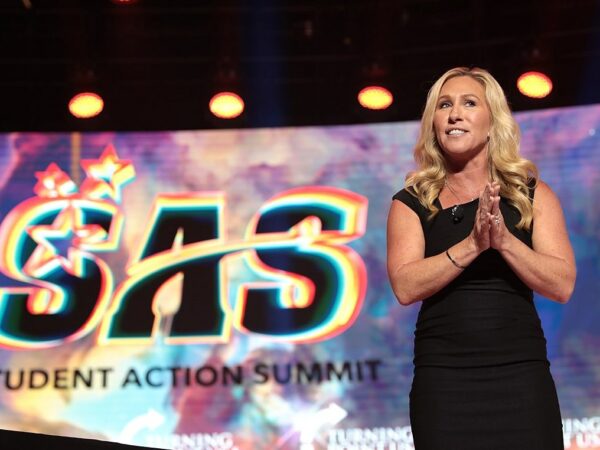
[1]">Like authoritarian regimes throughout history and around the world, threats to cultural and political power are leading many on the Christian Right to fear declining national birth rates and promote traditional gender roles and having more babies for “the nation.”
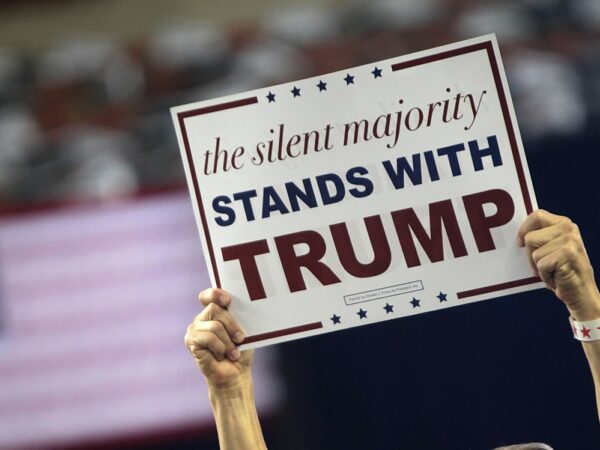
White Christian Nationalism is being actively transformed into a theo-political program – and a grave threat to American Democracy.
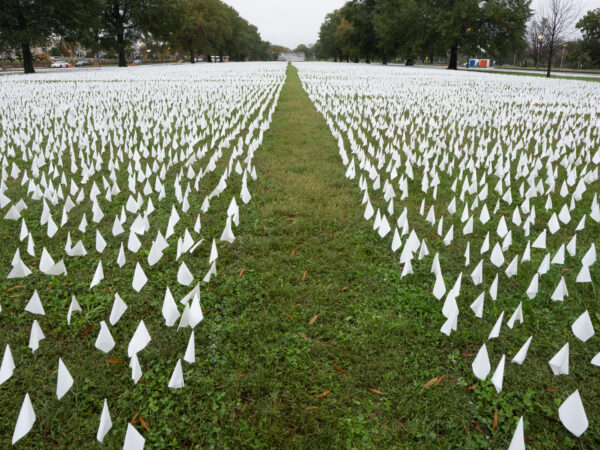
If theorizations of care are to more directly address the current “crisis of care,” we need not only to prioritize the kinds of embodied, particularized care that care ethics has highlighted in the past, but to explore a wider range of caring relationships and their diverse structures.

The judgment of history is a moral belief that, somehow in the long run, the good and the true will win out, since the “long arc of the universe bends towards justice.”

In this second set quick takes, feminist ethicists respond to the recent Dobbs v. Jackson decision, mixing and challenging Catholic ideas regarding reproductive health and justice.
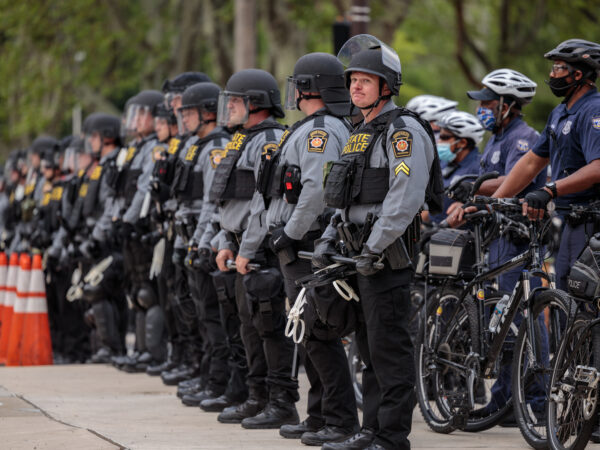
In an era during which police institutions and ideology are so fundamental to our cultural common-sense, how can theologians and critical theorists challenge this form of power?
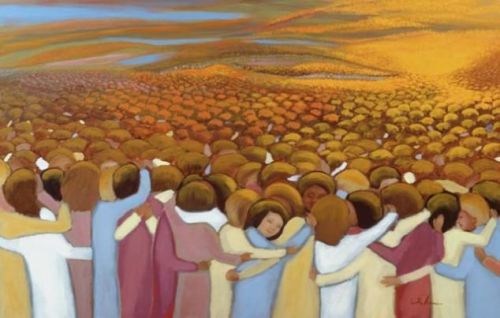
The ecclesiological model that emerges from reading Paul and Mouffe could allow us to position the church itself as a politically and theologically diverse community within the larger society. The role of the church is not to strive towards articulating one uniform voice, both within or in public spaces, but highlight various and even rival voices.
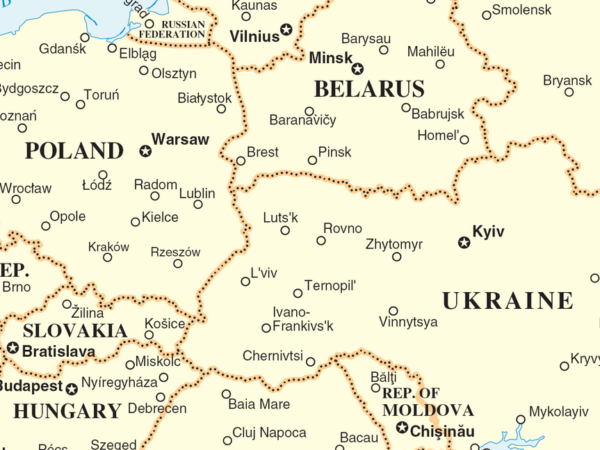
I am a Christian theologian who abhors war and believes that all other reasonable means should be exhausted before the use of lethal force is undertaken. At the same time, I am convinced that there are times – albeit rare – when the evil is so great that no measure other than force will prevent grave atrocities on a massive scale.
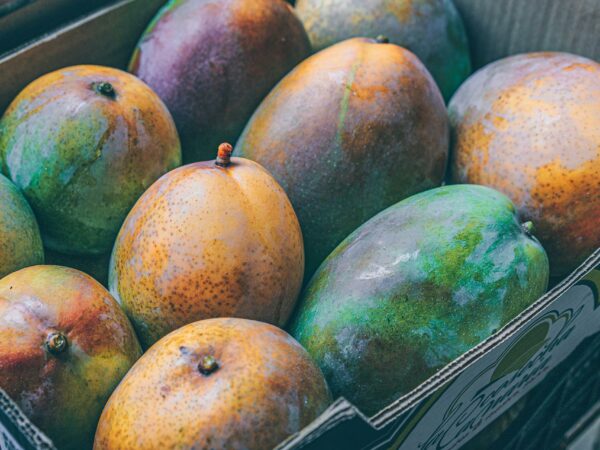
There is more to the ‘fruit’ image than a mere word play, for a basket of summer fruit is itself a potent symbol with political-theological connotations. This text about the vision of ‘a basket of summer fruit’ is a vision of contestation for the cause of justice.